
In digital entertainment and real-money gaming, operational security and software integrity represent the absolute bedrock of player trust. When you place a wager on an online slot machine, join a live dealer baccarat table, or transfer funds through digital payment gateways, you need absolute assurance that the games are unmanipulated, your personal financial data remains encrypted, and your account credentials cannot be compromised.
At MILYON88 Review, our evaluation framework places paramount emphasis on auditing the technological architecture, cryptographic defenses, and fairness testing protocols deployed across online casino platforms. This guide provides a detailed technical overview of how Random Number Generators (RNG) function, how enterprise SSL encryption protects transactions, how identity verification safeguards your funds, and how reputable gaming studios maintain provable fairness.
Technical Foundations of Game Fairness (Random Number Generation)
The core mechanism ensuring fair play across digital casino games—including video slots, digital table games, and electronic bingo—is the Random Number Generator (RNG). Understanding the mathematical mechanics of RNG systems dispels common player misconceptions regarding game manipulation or "rigged" outcomes:
Cryptographic Pseudo-Random Number Generators (PRNG)
Digital casino software does not rely on simple mechanical randomness; instead, it deploys advanced cryptographic mathematical algorithms known as Pseudo-Random Number Generators. These algorithms produce long, unpredictable sequences of numeric values at a rate of thousands of calculations per second, even when a machine is completely idle.
Seed Values and Millisecond Timing
When you tap the "Spin" button on a video slot such as Super Ace or Fortune Gems, the software captures the exact millisecond numerical seed generated by the algorithm at that precise instant. This raw mathematical value is immediately translated through the game's internal look-up table into visual reel symbols, stopping positions, and scatter triggers.
- The moment you press the button, the outcome of that round is already mathematically finalized.
- Subsequent visual animations, cascading reels, or rolling dice graphics are simply graphical presentations designed to reveal the pre-determined algorithmic outcome to the player.
Independence of Game Rounds
Every single spin, roll, or deal produced by an authentic RNG is an entirely independent statistical event. The software maintains zero computational memory of preceding spins.
- A game does not become "due for a jackpot" following a prolonged sequence of non-winning rounds.
- Conversely, hitting a high-multiplier payout on one spin does not mathematically decrease the probability of triggering another payout on the subsequent spin.
Independent Testing Laboratories and Certification
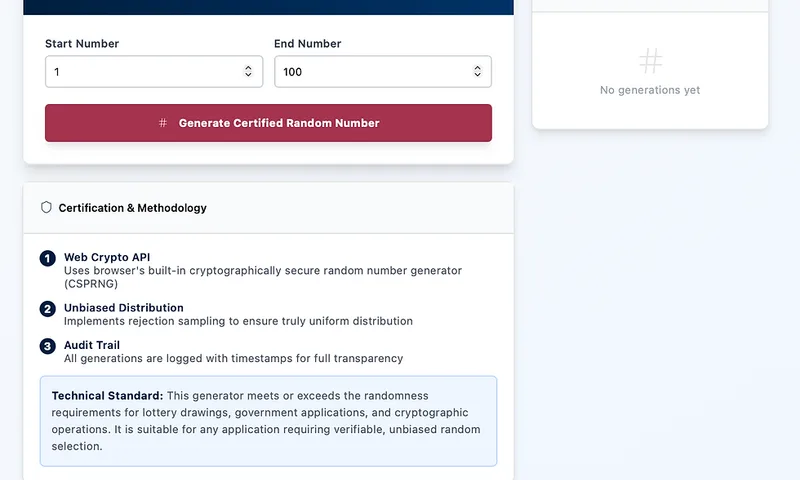
Gaming operators do not audit their own random number algorithms. To prove that game outcomes conform to strict mathematical standards, software studios submit their core code to accredited, independent third-party testing laboratories:
| Testing Laboratory | Primary Testing Scope | Industry Standing |
|---|---|---|
| BMM Testlabs | RNG statistical randomness, game mathematics, source code audits | Global pioneer in gaming compliance testing since 1981 |
| Gaming Laboratories International (GLI) | Land-based and digital casino systems, software security | Globally recognized certification authority across 480+ jurisdictions |
| iTech Labs | Return to Player (RTP) verification, card shuffling algorithms | Specialist laboratory for digital casino and poker integrity |
| eCOGRA | Consumer protection audits, live dealer stream fairness | Premier UK/European testing agency and dispute mediator |
When software developers such as JILI Games, Fa Chai, PG Soft, and Evolution Gaming deploy games, they provide verified compliance certificates from these laboratories certifying that:
- The algorithm exhibits zero statistical bias or predictable patterns.
- The actual observed payout percentage matches the published theoretical Return to Player (RTP) within statistical tolerances.
- The game software cannot be accessed or manipulated by the casino operator's hosting server.
Data Encryption and Network Infrastructure Protection
Transmitting payment details, phone numbers, and identity documentation across the internet requires enterprise-grade cryptographic security:
256-Bit Secure Sockets Layer (SSL) Encryption
Reputable gaming websites implement 256-bit SSL (Transport Layer Security - TLS 1.3) protocols across every web page and mobile application endpoint. This encryption standard ensures that all communication between your mobile browser and the platform's central data servers is converted into unreadable ciphertext.
- Any third party attempting to intercept your connection across public Wi-Fi or cellular networks sees only scrambled, undecipherable mathematical code.
- You can visually verify an active SSL certificate by inspecting the padlock icon positioned to the left of the website URL in your browser bar.
Distributed Denial of Service (DDoS) Mitigation
High-traffic digital portals deploy multi-layered cloud mitigation networks, such as Cloudflare or Akamai, to filter malicious web traffic, deflect bot intrusions, and protect server databases against unauthorized penetration.
Database Sandboxing and Tokenization
Sensitive player credentials, including encrypted passwords and payment authorization tokens, are stored in isolated, sandboxed databases protected by multi-factor administrative access controls. Operators do not store raw credit card numbers or e-wallet account PINs on internal servers.
Digital Payment Gateway Security
Financial transactions executed within the Philippine digital gaming space rely primarily on authorized local electronic payment channels:
E-Wallet Security Architectures
Transactions conducted through GCash and Maya benefit from the comprehensive security safeguards enforced by local financial service providers under the regulatory oversight of the Bangko Sentral ng Pilipinas.
- Two-Factor Authentication (2FA): Every deposit or withdrawal transaction requires biometric verification or a unique SMS One-Time Password (OTP) dispatched to your personal SIM card.
- Dynamic Single-Use QR Codes: Modern casino cashiers generate single-use, time-sensitive QR codes for every deposit order. This architecture prevents duplicate billing and guarantees that funds route precisely to designated merchant accounts.
Regulatory and AML Compliance
Digital payment gateways deployed by Philippine operators must conform to strict Anti-Money Laundering (AML) standards monitored by authorities like PAGCOR. These guidelines mandate that:
- Payouts are transferred exclusively to payment accounts bearing the identical legal name of the registered player.
- Suspicious transaction clustering or rapid depositing followed by immediate withdrawal requests without betting turnover are flagged for manual security review.
Know Your Customer (KYC) and Anti-Fraud Verification
While identity verification procedures may sometimes feel like an administrative inconvenience, they represent one of the most vital security protections in the online gaming ecosystem:
[Account Registration] ──> [Profile Completion] ──> [Document Submission] ──> [Identity Verification] ──> [Full Cashout Clearance]
The Role of KYC in Player Protection
- Preventing Account Takeover: If an unauthorized party gains access to your password, they cannot divert your funds to their personal wallet because the recipient account name must match your verified identity.
- Combating Underage Gaming: Verifying government-issued identification ensures that minors under the legal age of 21 are prevented from accessing real-money gaming environments.
- Eliminating Multi-Account Fraud: Fraudulent syndicates often attempt to exploit promotional bonuses by opening dozens of fake accounts. KYC checks maintain a level playing field for honest recreational players.
Practical Security Advice for Players
While platform-level encryption provides robust protection, individual security habits remain the primary line of defense against unauthorized account access:
- Use Complex, Unique Passwords: Never reuse the same password across your email, social media, and gaming accounts. Combine lowercase letters, uppercase letters, numbers, and symbols.
- Never Disclose Your SMS OTP: Official customer support staff will never request your mobile verification code, e-wallet PIN, or password over chat, email, or telephone. Any individual asking for these credentials is an unauthorized imposter.
- Keep Operating Systems Updated: Ensure your smartphone or computer receives regular security patches to protect against malware or keyloggers designed to capture keyboard inputs.
- Verify Official URLs: Always confirm that the domain name in your browser matches the verified web address before entering your login credentials or scanning cashier QR codes.
Frequently Asked Questions
Can an online casino manually adjust the win rate on a slot game?
No. Licensed software studios host the mathematical game engines on secure central cloud servers; individual casino operators cannot alter the underlying game RTP or RNG calculations.
How do I know if a casino website uses a valid SSL certificate?
Look for the locked padlock symbol in the address bar of your browser before the URL (e.g., https://). Clicking the padlock displays the encryption certificate details and issuer validity.
Why do I need to submit a photo ID before withdrawing winnings?
Submitting government-issued identification satisfies mandatory Know Your Customer (KYC) regulations that protect against identity theft, underage gambling, and third-party fund diversion.
Is it safe to scan dynamic GCash QR codes in the casino cashier?
Yes, provided that the QR code was generated directly within your active casino cashier session and is processed using the official GCash or Maya mobile app.
Where can I find support if I suspect fraudulent activity on my account?
Immediately contact the operator's 24/7 official live chat desk to freeze account access. For broader player protection advice and recovery support, contact Gambling Therapy or Gamblers Anonymous.