
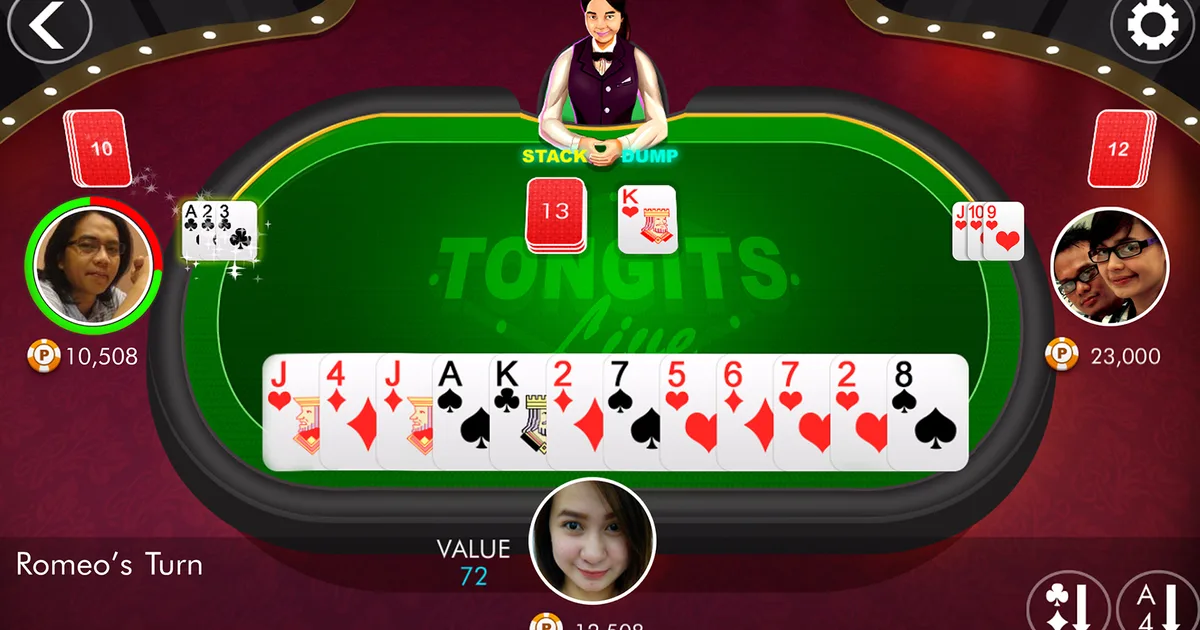
Card games have long served as the centerpiece of social gatherings, community celebrations, and friendly competition across the Philippines. Among all traditional Filipino card games, none commands greater cultural passion and tactical depth than Tongits (also spelled Tong-its). Originally popularized in northern Luzon in the 1990s, this 3-player rummy derivative has transitioned into the digital sphere, allowing Filipino enthusiasts to compete in real-time, real-money matches from their smartphones.
Unlike purely chance-based casino games such as slot machines or roulette, online Tongits is a game of skill, deduction, memory, and psychological pacing. A disciplined player who tracks discarded cards, manages meld exposure, and times challenge calls accurately will consistently outperform casual opponents over time. This comprehensive guide covers the official rules of online Tongits, card meld formations, the mechanics of Fight calls and Sapaw, pot payout distributions, bankroll preservation, and verified cashout procedures.
Technical Specifications and Game Mechanics
Before joining a real-money Tongits table, reviewing the core structural parameters helps you understand how digital card rooms operate:
| Game Characteristic | Standard Specification | Strategic Player Impact |
|---|---|---|
| Number of Players | Exactly 3 Players per Table | Creates a balanced triangular dynamic where every discard matters |
| Deck Composition | Standard 52-Card Deck (No Jokers) | Finite card counts allow skilled players to count live and dead cards |
| Initial Card Deal | 13 Cards to Dealer, 12 Cards to Others | The dealer acts first by discarding one card to start the discard pile |
| Core Objective | Minimize deadwood points or empty hand | Win by hitting "Tongits," winning a "Fight," or having lowest points at draw exhaustion |
| Betting Structure | Ante + Pot + Special Bonus Tally | Pots are funded through ante chips, challenge stakes, and special hand bonuses |
| Table Stake Ranges | PHP 1.00 / point to PHP 100.00+ / point | Accessible for micro-stake casuals and experienced high-stakes card sharks |
| Turn Time Limit | 15 to 20 Seconds per Turn | Enforces rapid decision-making and prevents intentional stalling |
The Core Objective: Three Ways to Win a Tongits Round
A round of Tongits concludes, and a winner is crowned, through one of three distinct game-ending conditions:
1. Hitting "Tongits" (Complete Hand Depletion)
The most definitive and prestigious victory occurs when a player successfully melds or connects all the cards in their hand, discarding their very last remaining card onto the discard pile with zero unmelded cards left in their possession. Achieving "Tongits" immediately ends the hand and awards the player the entire accumulated pot, plus bonus chip payouts from both losing opponents.
2. Winning by Calling a "Fight" (Challenger Showdown)
If you believe your unmelded cards carry a lower total point value than your two opponents, and you have already laid down at least one exposed meld, you can initiate a "Fight" (or Draw Challenge) at the start of your turn.
- Your opponents have the option to Fold (conceding defeat and paying the base pot penalty) or Challenge your call.
- If challenged, all active players reveal their unmelded hands. The player with the lowest total card points wins the pot.
- However, if an opponent holds an equal or lower point count than you, you are deemed "Burned" (Sunog) and must pay a heavy penalty to the challenger.
3. Exhaustion of the Central Draw Pile
If no player hits Tongits and no one initiates a successful Fight call, the hand continues until the central 52-card draw deck is completely exhausted. When the final card from the deck is drawn and discarded, all remaining players must lay down their hands for a mandatory point count. The player holding the lowest cumulative point count in their unmelded hand wins the round.
Card Melds and Hand Combinations
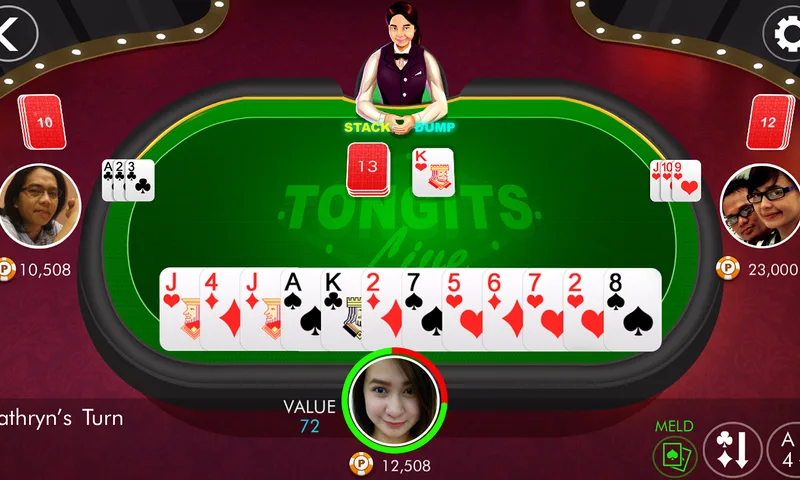
To reduce your deadwood points and earn the right to challenge opponents, you must assemble valid card melds (known locally as Bahay or Set):
Valid Melds in Tongits:
- Three of a Kind (Trio): Three cards of identical numerical rank across different suits (e.g., 7♠ - 7♦ - 7♥).
- Four of a Kind (Quartet): Four cards of identical numerical rank across all four suits (e.g., K♠ - K♦ - K♣ - K♥). In digital rooms, four of a kind can be laid down as a single powerful meld or split into secret reserve melds.
- Straight Flush (Escalera / Sequence): Three or more consecutive cards of the exact same suit (e.g., 4♣ - 5♣ - 6♣ - 7♣). Aces can be played low in a sequence (A♠ - 2♠ - 3♠) but cannot wrap around (K♠ - A♠ - 2♠ is strictly invalid).
[Valid Trio: 9♦ - 9♥ - 9♣] [Valid Escalera: J♠ - Q♠ - K♠] [Invalid: 8♦ - 9♦ - 10♠ (Mixed Suits)]
Deadwood Card Point Scoring:
Any cards remaining in your hand that are not part of an exposed or secret meld are scored according to this point scale during a Fight or deck exhaustion:
| Card Face Rank | Point Value Assigned | Strategic Hazard Assessment |
|---|---|---|
| Ace (A) | 1 Point | Lowest point card; safest card to hold when anticipating a Fight |
| Number Cards (2 through 9) | Face Value (2 to 9 Points) | Low-to-moderate points; manageable deadwood risk |
| Number Card 10 | 10 Points | High-risk deadwood card; discard early if unmelded |
| Jack (J) | 10 Points | High-risk royal card; dangerous to hold during end-game |
| Queen (Q) | 10 Points | High-risk royal card; primary candidate for strategic early discard |
| King (K) | 10 Points | High-risk royal card; carries maximum point penalty if caught |
Holding Kings, Queens, Jacks, or Tens when an opponent calls a Fight severely elevates your point total. Skilled players prioritize discarding unmatched picture cards during early rounds.
Tactical Game Rules: Sapaw, Chow, and Secret Melds
Understanding advanced gameplay options separates casual players from consistent table winners:
The "Chow" Mechanic (Taking from the Discard Pile)
When the player seated immediately to your left discards a card, and that specific card completes a valid meld with two cards already sitting in your hand, you may claim that card by calling "Chow".
- You can only "Chow" the card discarded by the player directly preceding you (to your left). You cannot claim cards discarded by the player to your right unless that card completes a "Tongits" victory hand.
- Whenever you Chow a card, you are obligated to expose the completed meld on the table immediately. You cannot take a discarded card and conceal it in your secret hand.
The "Sapaw" Mechanic (Connecting to Existing Melds)
Once any player at the table has exposed a valid meld on the felt, you have the right during your turn to attach qualifying cards from your hand onto their meld—a move known as "Sapaw".
- If an opponent has exposed an Escalera of 5♥ - 6♥ - 7♥, and you hold the 4♥ or 8♥, you can attach it to their run during your turn.
- If an opponent has exposed a Trio of 8♠ - 8♦ - 8♣, and you hold the remaining 8♥, you can execute a Sapaw onto their set.
- Strategic Advantage: Performing a Sapaw sheds high-point cards from your hand without requiring you to form a completely new meld. Furthermore, the player who receives a Sapaw onto their exposed cards is temporarily barred from initiating a Fight on their next turn.
Secret Melds vs Exposed Melds
You are not legally obligated to expose your melds on the table as soon as you form them. You can choose to hold complete Trios or Escaleras secretly in your hand.
- Advantage of Secret Melds: Concealing your sets prevents opponents from knowing how few deadwood points you hold and denies them opportunities to perform a Sapaw on your cards.
- Requirement to Fight: However, you must expose at least one valid meld onto the table before the rules permit you to declare a Fight call. A player holding purely secret melds cannot initiate a challenge.
Rules of the Fight Challenge: When to Call and How to Defend
Declaring a Fight is the most dramatic tactical moment in a round of Tongits. However, reckless challenge calls are heavily penalized:
[Your Turn Starts] ──> [Verify One Exposed Meld] ──> [Calculate Deadwood Points] ──> [Declare "Fight"] ──> [Opponents Fold or Challenge]
Qualifications to Call a Fight:
- It must be the beginning of your turn (before you draw from the deck).
- You must have already laid down at least one exposed meld on the table.
- No opponent has executed a Sapaw onto any of your exposed melds during the immediately preceding round.
The Consequences of the "Burn" (Sunog):
When you declare a Fight, each opponent examines their unmelded points. If any opponent challenges your call and holds equal or fewer deadwood points than your hand, you lose immediately by default.
- You must pay the full winning pot share to the victorious challenger.
- You are penalized an additional penalty fee for initiating an invalid challenge.
- Therefore, never declare a Fight unless your remaining unmelded cards total less than 10 to 12 points (ideally holding only low cards such as Aces, 2s, or 3s).
Tactical Table Strategies for Real-Money Tongits
Achieving consistent results in digital Tongits requires strict tactical discipline rather than relying on lucky card deals:
Discard Tracking and Card Counting
Because a standard deck contains exactly 52 cards with no duplicates, tracking the cards appearing in the open discard pile and exposed table melds provides critical intelligence.
- If two Queens have already been discarded and one Queen sits in an opponent's exposed meld, you know with 100% certainty that the remaining Queen cannot form a Trio. Holding an isolated Queen in your hand is mathematically futile; discard it immediately.
- Pay close attention to what the player to your right discards; avoid discarding suits or ranks that fit into patterns they are actively collecting.
The Danger of Early Meld Exposure
Beginners often make the mistake of exposing every meld the instant it is formed. Laying down your cards too early gives your opponents vital information about what suits you are hoarding, limits your hand flexibility, and opens your melds to hostile Sapaw plays that freeze your ability to challenge. Maintain secret melds until the mid-to-late game unless exposing a meld is required to execute a tactical Chow.
Defensive Discarding Against Approaching "Tongits"
If an opponent has exposed two large melds and has only two or three cards remaining in their hand, they are on the verge of hitting Tongits. Shift into complete defensive mode:
- Discard only "dead cards"—cards of ranks and suits where three or four copies are already visible on the table.
- Never discard a fresh middle card (such as a 6, 7, or 8) that has not yet appeared on the felt, as middle cards carry the highest mathematical probability of completing an opponent's running Escalera.
Bankroll Management for Digital Card Rooms
Real-money Tongits tables operate on point multipliers where stakes fluctuate based on side bets, special hand bonuses (such as Sagasa or 4-of-a-Kind), and challenge penalties:
- The 50-Ante Rule: Never join a Tongits table unless your active bankroll equals at least 50 times the base table ante. If a table has an ante stake of PHP 10.00 per point, ensure you bring at least PHP 500.00 to the table. This buffer protects you against short-term bad draws or consecutive fold rounds.
- Table Stake Discipline: If you experience three consecutive losses where your hands are burned, step away from the table. Emotional tilt leads to reckless Fight declarations and poor discard choices.
- Instant Cashier Payouts: Authorized platforms support rapid cashouts through local e-wallets such as GCash and Maya. When you conclude a profitable card session, transfer your winnings to your personal wallet to secure your returns, operating under regulatory oversight monitored by PAGCOR and the Bangko Sentral ng Pilipinas.
Responsible Gaming Reminder
Card games are intellectually stimulating and socially engaging, but real-money wagering must always be approached with strict spending limits. Treat card table stakes purely as an entertainment expense, never as an income source. If you or someone you know requires assistance with managing gambling habits, free and confidential counseling is available through Gamblers Anonymous and Gambling Therapy.
Frequently Asked Questions
What happens if two players have the exact same point score during a Fight?
In standard Philippine Tongits rules, if a challenger and a defender tie with the identical lowest point total during a Fight, the defender (the non-challenging player) is awarded the victory, and the challenger is penalized as "burned."
Can I declare a Fight without laying down an exposed meld?
No. Platform rules strictly mandate that you must have exposed at least one valid meld (Trio or Escalera) onto the table felt before the interface will allow you to click the "Fight" button.
What does "Sunog" (Burned) mean in online Tongits?
"Sunog" refers to a player who ends the round with zero melds laid down, or a challenger who loses a Fight showdown to an opponent with equal or lower points. A burned player is disqualified from winning the pot and must pay maximum table penalties.
Can an Ace be used in both low and high sequences?
In standard Tongits, the Ace can be played as the lowest card in an Escalera (A-2-3), but it cannot be played high in a wrap-around sequence (such as Q-K-A or K-A-2). The Ace is valued at exactly 1 deadwood point.
Is online Tongits legal to play for real money in the Philippines?
Online Tongits is accessible through authorized gaming portals catering to adult players aged 21 and above, providing verified e-wallet transactions via GCash and Maya.
Related Guides & Silo Navigation
- Return to Pinoy Traditional Games Hub — Explore Color Game, Pusoy Dos, and Sabong.
- Digital Perya Color Game Guide — Master 3-dice probability and odds.
- Online Sabong & Cockfighting Overview — Live DS88 stream betting rules.
- MILYON88 GCash Deposit Tutorial — How to fund your balance for card games.
- Fast Cashout and KYC Verification — Learn how to withdraw card game winnings.